 Preventing Falls in the Workplace
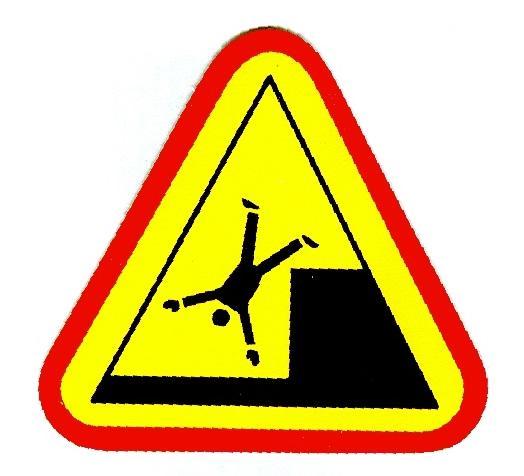
Falls remain one of the most serious and costly safety hazards in industrial and warehouse environments. Year after year, the Occupational Safety and Health Administration (OSHA) identifies falls as a leading cause of workplace injuries and fatalities. In fact, OSHA requires fall protection when working at elevated heights where employees are exposed to open edges, floor openings, or loading areas. 302 workers in non-construction jobs lost their lives in 2021 after falling to a lower level on the job. Workers’ compensation claims for injury average over $36,000, and fatalities can cost a company over $1.4 million. Falls that lead to severe injury not only lead to physical, emotional, and financial pain for all involved.
In 2023, OSHA created a National Emphasis Program on Falls to work to drastically reduce these issues. We are happy to report that all of our safety gate models – even the custom applications – comply with these regulations and standards.
Regulatory Oversight Beyond OSHA
While OSHA establishes baseline federal standards, it is not the only authority governing fall protection. ANSI and the International Building Code (IBC) provide additional guidance for guardrails and elevated surfaces, while Canada’s Canadian Centre for Occupational Health and Safety outlines nationally recognized safety expectations. Our fall protection gates are engineered to comply with these standards across industrial, warehouse, and loading dock environments.
OSHA Walking-Working Surface Regulations
OSHA’s Walking-Working Surface Regulation 1910 Subpart D requires a barrier be in place to guard any opening on platforms elevated four feet (4′) or higher on which an employee is working, and that the barrier be in place when the opening is not in use for handling materials. These rules directly impact mezzanine fall protection, pallet drop zones, and dock areas where materials are transferred.
Key OSHA safety gate requirements include:
- A physical barrier must be in place when openings are not actively used
- Toe boards or equivalent protection are required where falling materials pose a hazard
- Guardrails must include a 42-inch top rail, mid-rail, and withstand a 200-pound force
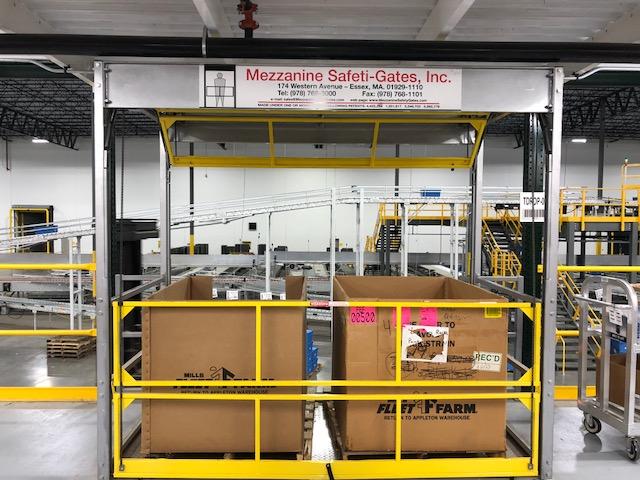
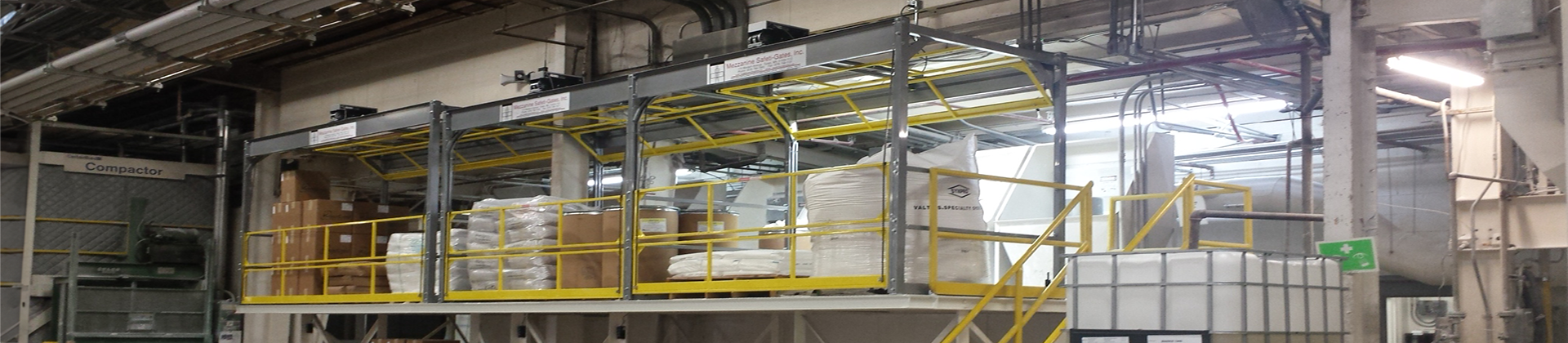
A fall protection safety gate with a dual-gate design is the most reliable way to meet these regulations. Unlike single-barrier systems, dual-gate designs ensure that one barrier is always in place, removing reliance on worker memory or manual intervention.
Single swing or sliding gates may appear compliant, but when held open by a pallet, they violate OSHA mezzanine regulations and expose workers to serious fall hazards.
OSHA-Compliant Gates for Mezzanines, Racks, and Docks
A properly designed mezzanine fall protection gate plays a vital role in preventing injuries at pallet drop areas. Dual-gate systems also provide effective pallet rack fall protection, ensuring workers remain protected during material loading and unloading.
For dock environments, loading dock fall protection is especially critical due to frequent forklift traffic and open edges. Installing OSHA-compliant barrier gates at dock doors helps meet OSHA loading dock fall protection expectations while minimizing operational disruptions.
ANSI Standards
ANSI MH32.1-2018, Stairs, Ladders and Open-Edge Guards for Use with Material Handling Structures outlines strict ANSI guardrail requirements for material handling structures, including pallet drop openings – even while the area is in use for handling materials.
Dual-gate pallet drop safety gate systems meet ANSI standards because a barrier is in place even during the active loading/unloading of material. Single barrier systems, such as swing, sliding, or lift-out gates, DO NOT meet the standard.
In addition, our power-operated safety gates ensure an active system. With power operation, workers do not have to remember to open or close the safety gate to provide fall protection, which makes it a very ergonomic solution as well.
IBC – International Building Code
Section 1015 Means of Egress, Guards, which governs guards and means of egress on elevated walking surfaces. Additional definitions and requirements appear in Chapter 5, addressing building heights and occupancy considerations. Compliance with IBC fall protection requirements is essential for facilities incorporating mezzanines and elevated platforms into their building design.
CCOHS – Canadian Centre for Occupational Health and Safety Fall Protection Plan
Under CCOHS codes, working at heights includes any task where a worker could fall and sustain injury. This applies to mezzanines, forklift platforms, and elevated work surfaces. Fall protection is required at heights under three meters when increased hazards exist, such as openings, machinery exposure, or hazardous substances.
Our fall protection gates meet these Canadian safety expectations, making them suitable for facilities operating across North America.
Built for Compliance and Designed for Safety
Whether you need OSHA-compliant safety gates, solutions for dock door fall protection, or systems that meet OSHA compliant mezzanines standards, Mezzanine Safeti-Gates delivers reliable, regulation-ready designs. Our dual-gate systems provide continuous protection, reduce reliance on worker behavior, and support safer, more efficient operations, helping you protect both your workforce and your bottom line.